Description:
The Galapagos Islands are not a destination, they are a living document. This expedition has been designed for students, academics, and inquisitive minds seeking to observe biological and geological processes in their purest form, transcending conventional tourism.
Here, geology is not read in books, it is walked on lava; and biology is observed in real time. This tour of the four inhabited islands is an invitation to turn the archipelago into your own classroom, actively participating in the protection of one of the most fascinating ecosystems on the planet.
Itinerary:
Your expedition begins on the continent. Upon landing in Quito or Guayaquil, you will be greeted by our team and transferred to your hotel. It is time to tune into the local rhythm and prepare your senses for the adventure that awaits us in the Pacific.
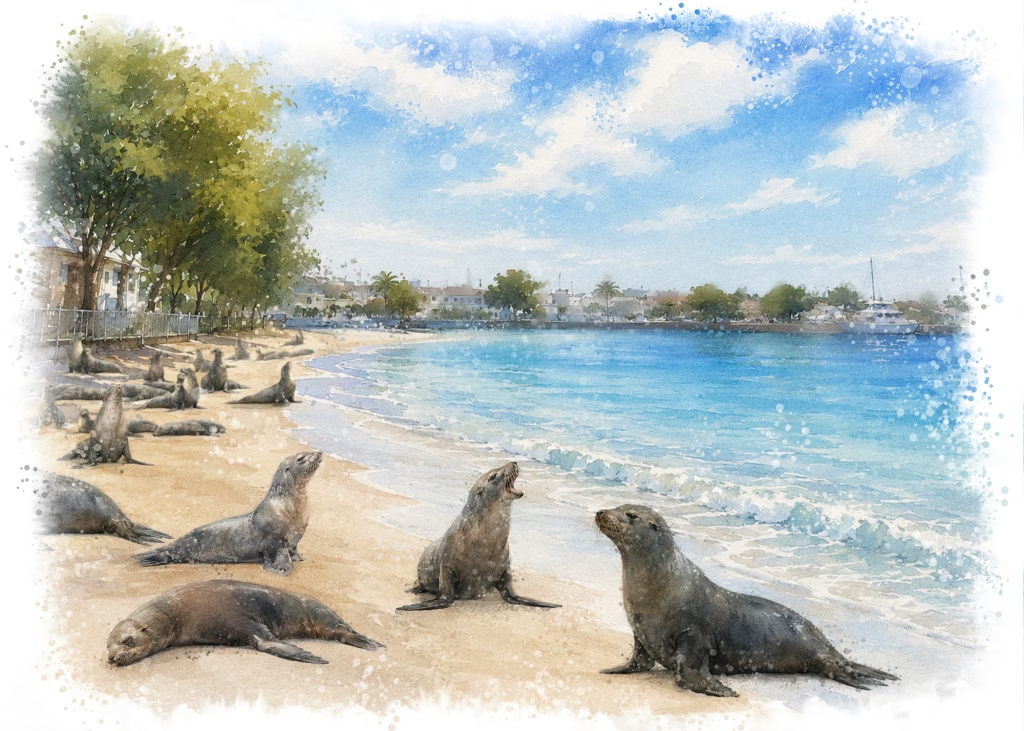
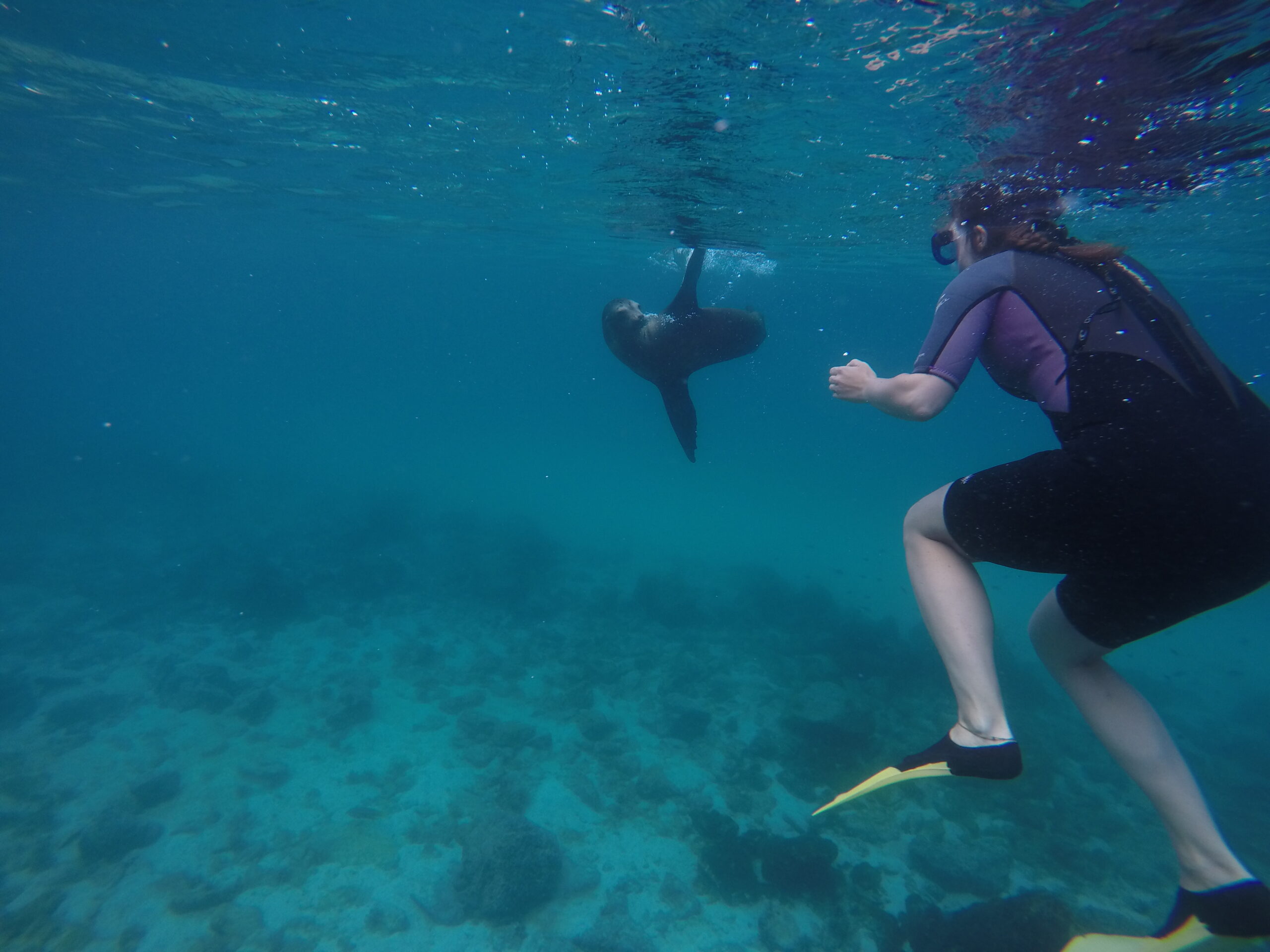
We start in San Cristóbal with an immersion in La Lobería. The objective is the direct observation of marine fauna. Here we will not only snorkel; we will have our first ethical encounter with the fauna. Under expert guidance, we will learn that in Galapagos we are the guests.
Observing sea lions and turtles in their habitat is the perfect introduction to understanding animal behavior and the strict conservation rules that keep this paradise intact.
Activities: hiking, beach, wildlife observation, snorkeling
Featured locations: San Cristóbal, La Lobería
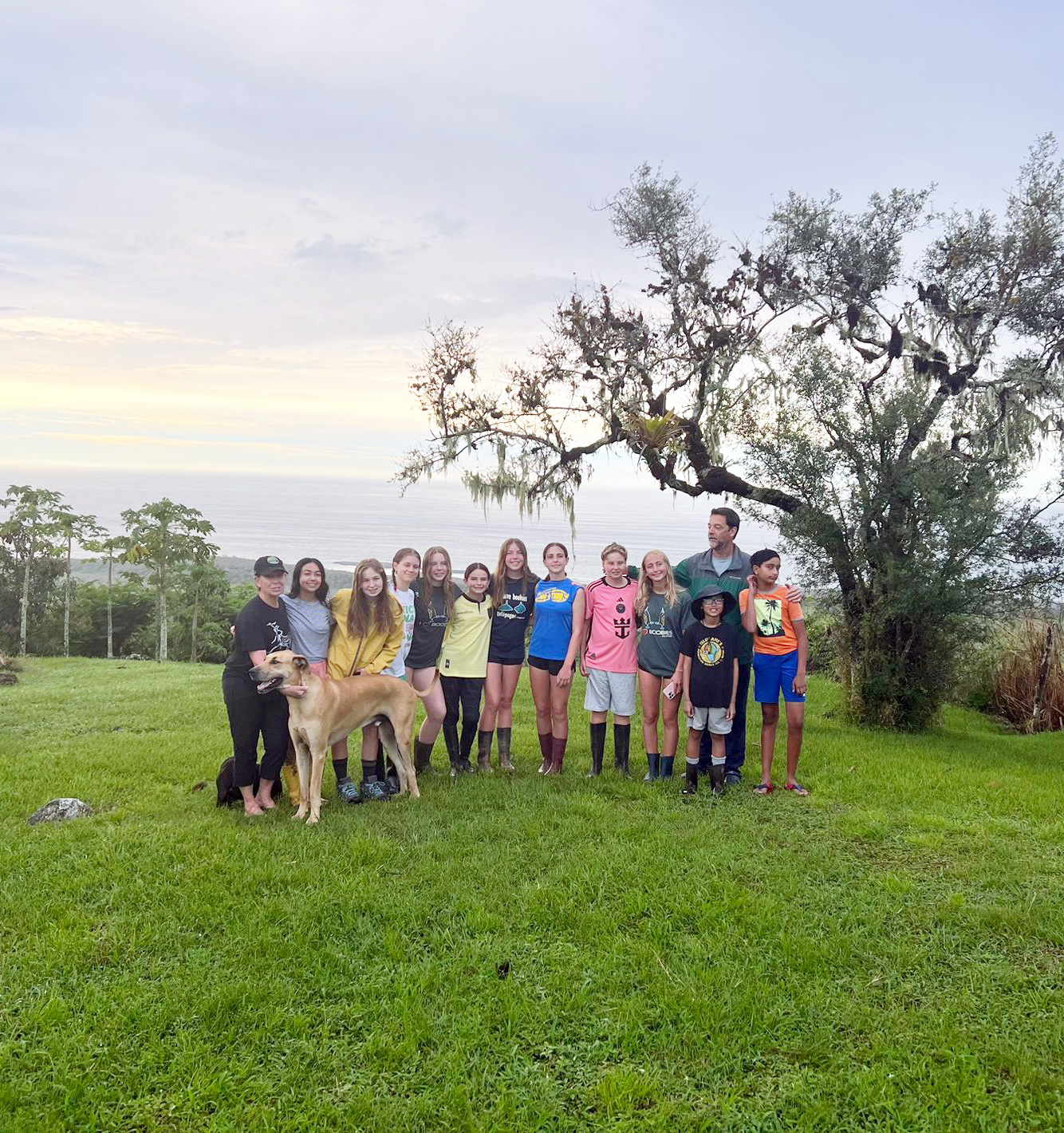
We leave the coast to analyze the challenges of biodiversity. On a farm in the highlands of San Cristóbal, we will participate in a day of reforestation of native species. This practical activity allows us to understand the critical impact of invasive species and the complexity of restoring a fragile ecosystem.
By identifying and removing invasive species such as blackberries, we will understand the constant struggle for the survival of endemic plants. It is a lesson in applied ecology where the student ceases to be an observer to become a direct actor in conservation.
Activities: hiking, wildlife observation, reforestation activity
Featured locations: Highlands of San Cristóbal, farm
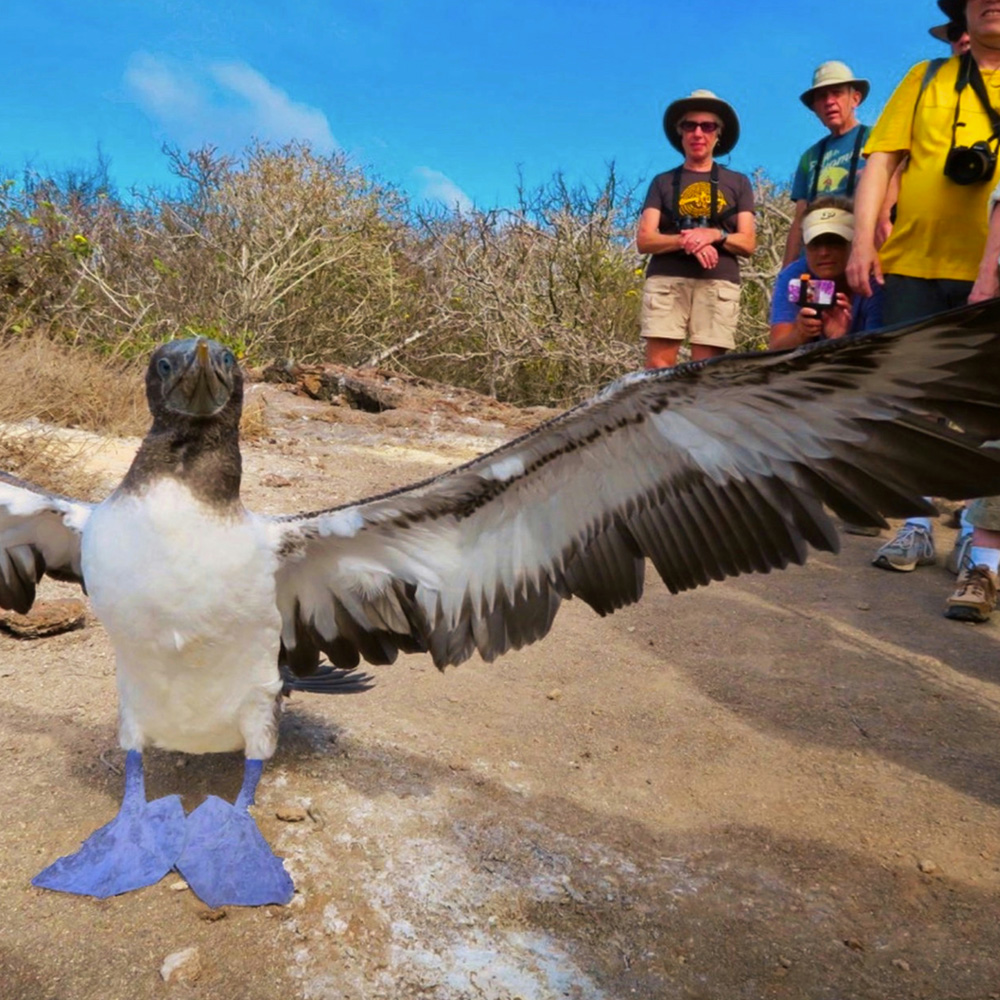
The morning begins connecting human and natural history in the Interpretation Center. Then we sail to Isla Lobos, this enclave is essential to walk among frigates and blue-footed boobies allows you to closely observe the nesting and courtship strategies that inspired Darwin.
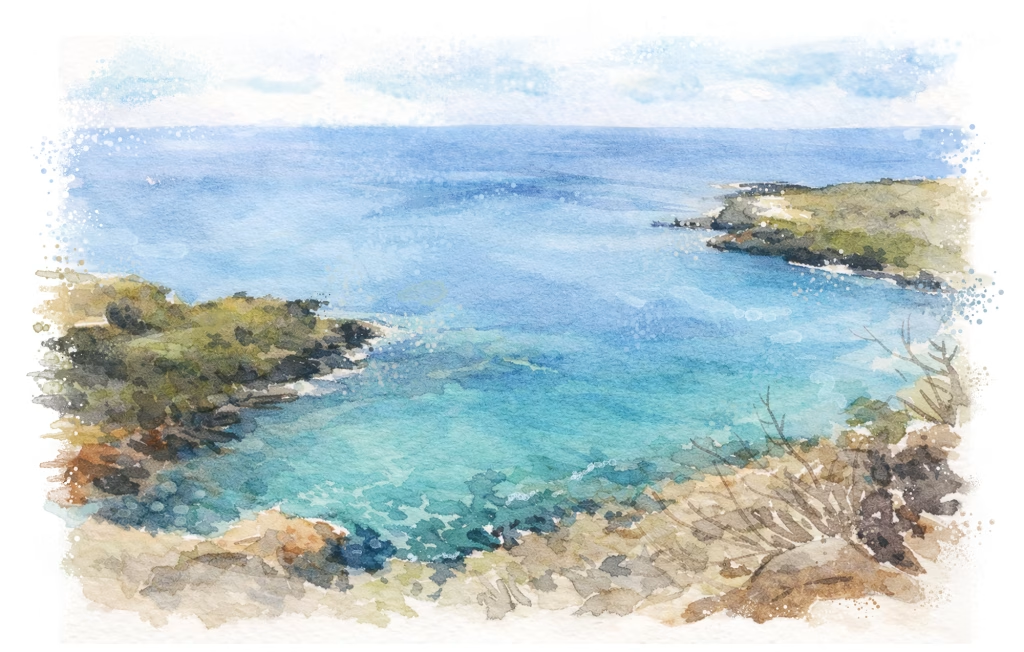
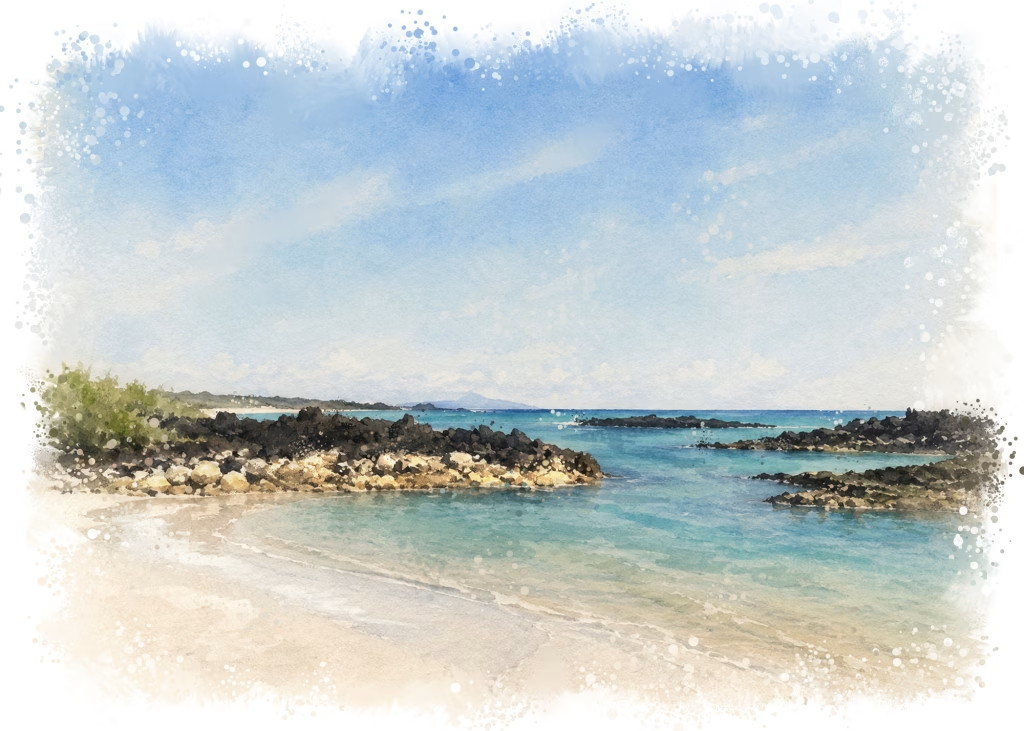
The day culminates in the calm waters of Playa Ochoa, a space to document the marine diversity observed during snorkeling.
Activities: hiking, wildlife observation, snorkeling
Featured locations: San Cristóbal, Interpretation Center, Isla Lobos and Playa Ochoa
We sail to the island with the most intriguing history of the archipelago. In Floreana, we will analyze the relationship between human settlements and natural resources. At the Asylum of Peace, we will explore caves that were home to pirates and settlers, analyzing how the availability of fresh water (the natural spring) determined life on the islands. It is a journey through time that mixes anthropology with survival in extreme conditions.
Activities: hiking, wildlife observation, navigation
Featured locations: Floreana Island, Asylum of Peace
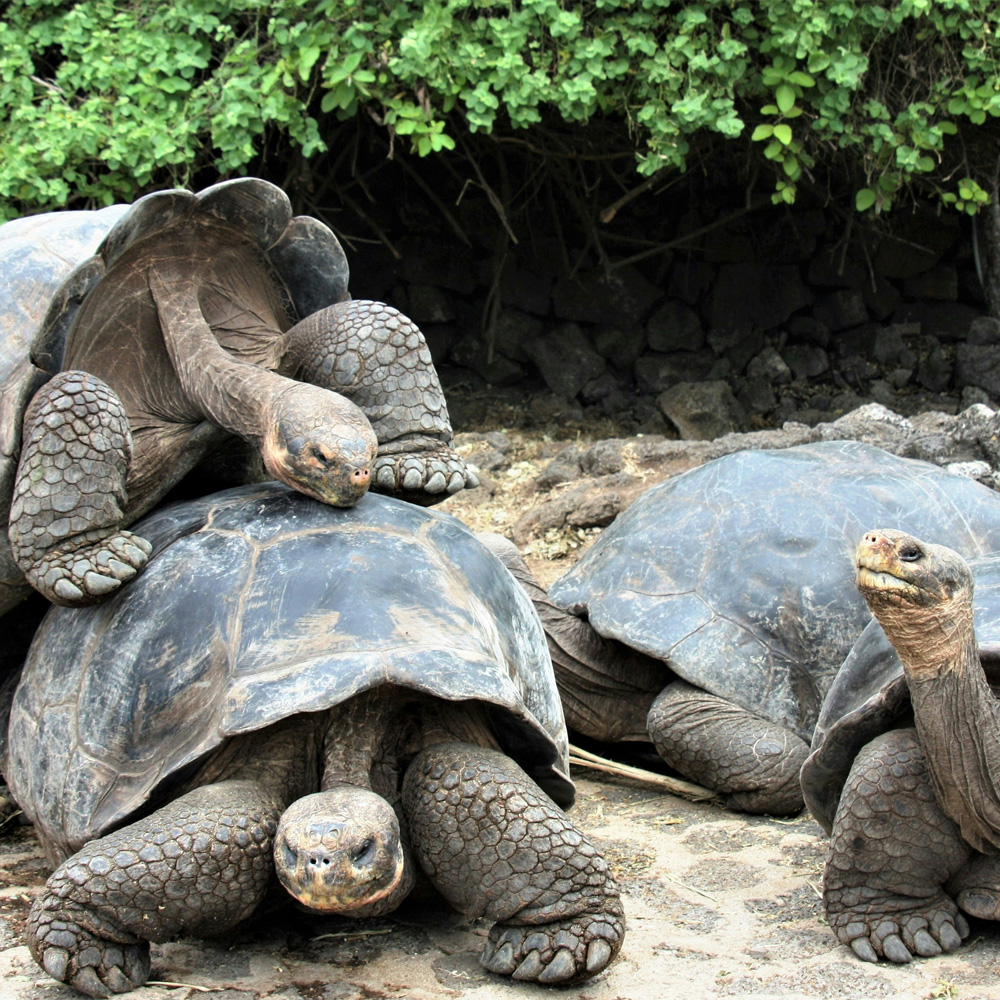
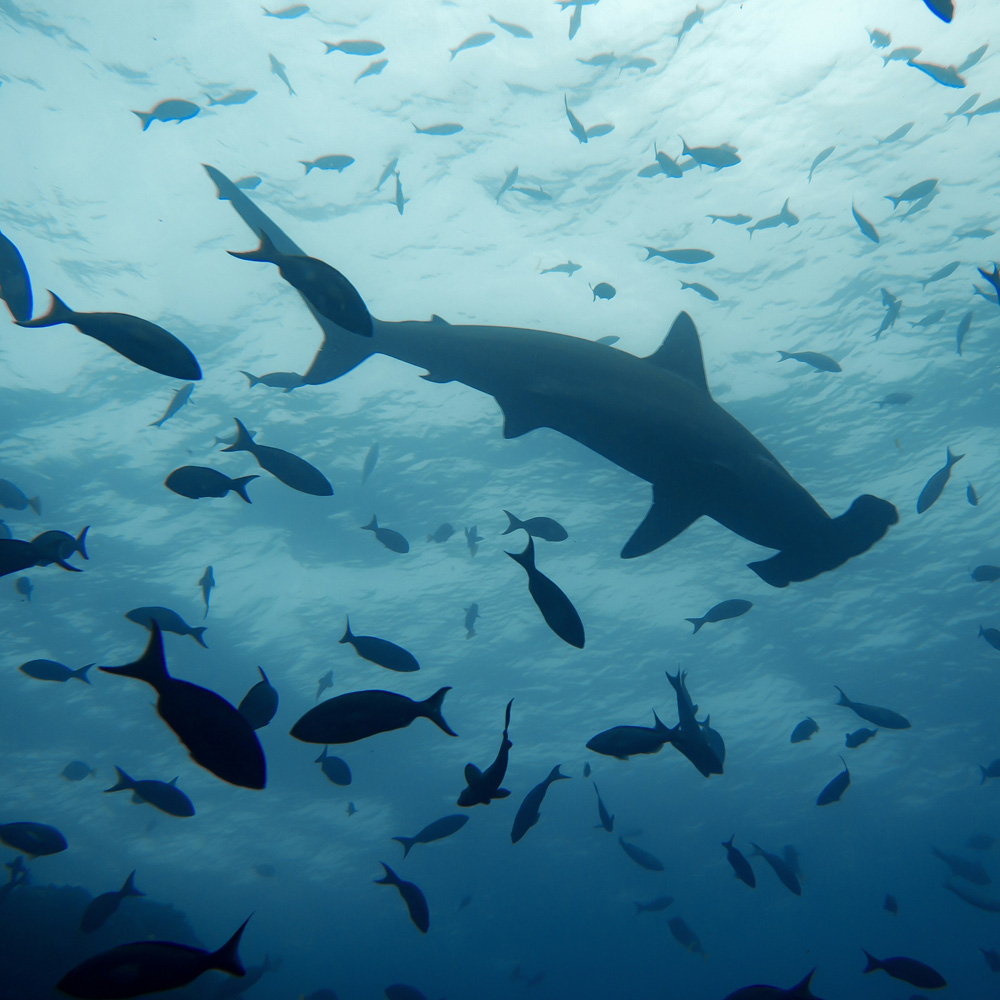
Isabela, the youngest and largest island, welcomes us with its telluric force. We will visit the Breeding Center to understand the captive breeding programs that have saved entire species of giant tortoises. In the afternoon, we will explore the Tintoreras Islet, we will walk on fresh lava to find Galapagos penguins and white-tipped sharks. It is a reminder of how life flourishes even in the most severe geological conditions.
Activities: hiking, wildlife observation, navigation
Featured locations: Isabela, Breeding Center, Tintoreras Islet
Today geology takes center stage. The expedition to the Sulfur Mines is a sensory experience: the smell of sulfur and the fumaroles connect us with the living core of the planet. From here, the view of the Sierra Negra volcano crater allows us to measure the magnitude of the forces that created these islands.
Activities: hiking, wildlife observation, navigation
Featured locations: Isabela, Sulfur Mines, Sierra Negra volcano
We arrived at the nerve center of conservation: the Charles Darwin Research Station. Here we will analyze current conservation projects and the importance of data management for environmental decision-making. After participating in educational activities at the station, we will close the trip with a walk to Tortuga Bay, a dune and mangrove ecosystem ideal for enjoying and relaxing in its beautiful bay.
Activities: hiking, wildlife observation, navigation
Featured locations: Santa Cruz, Charles Darwin Research Station, Tortuga Bay.
The transfer to Baltra Airport marks the closing of the travel log. Upon leaving the archipelago, the group not only takes away memories, but also a critical and well-founded vision on global conservation. The return to the continent is the beginning of the mission to share and apply what has been learned in this unique corner of the planet.
- Included
- Meals according to itinerary (details of inclusions will be confirmed by the agency.
- Accommodation in single, double or triple rooms. (single rooms subject to an additional supplement).
- Isabela port fee, water taxis, Lobito bus ticket in Baltra, ferry to cross to Baltra.
- Transportation on the islands and between islands (except during free time).
- Snorkel equipment: mask, fins, tube, wetsuit and life jacket.
- Attentive and friendly local guides.
- Permanent assistance from our multilingual staff.
- Excluded
- Round trip air tickets from Quito or Guayaquil to San Cristóbal or Baltra.
- Entrance to the Galapagos National Park ($200 per person).
- TCT Transit Control Card ($20)
- Meals and drinks not specified in the program.
- Round trip flight from Mainland Ecuador to Galapagos
- Additional costs derived from flight delays or cancellations.
- Travel insurance (it is mandatory to have insurance that covers repatriation and loss of luggage)
- Tips for guides and boat crew (tips for transfers between islands are not included).
Additional information:
- Keep in mind that although we have pre-arranged packages, all of them can be customized.
- We can add or combine services according to your requirements.
- The program may change due to National Park regulations or weather conditions without prior notice.
- The Galapagos time zone is one hour less than that of Mainland Ecuador.
- The official currency of Ecuador is the US dollar.